




Supporting Early Readers
by Abi Swartzendruber
 Launch the media gallery 1 player
Supporting Early Readers at Home: Simple Strategies for Families
Abbi Swartzendruber
Learning to read is one of the most important skills children develop in the early elementary years. While reading instruction begins at school, families also play an important role in helping children build confidence and strengthen literacy skills at home. Simple activities completed consistently can help children improve decoding, fluency, vocabulary, and comprehension over time.
Families do not need special training or expensive materials to support reading development. Reading together, practicing sounds and words, and creating positive reading routines can make a meaningful difference in a child’s progress. When children feel encouraged and supported, they are more likely to develop confidence and motivation as readers.
Read Together Everyday
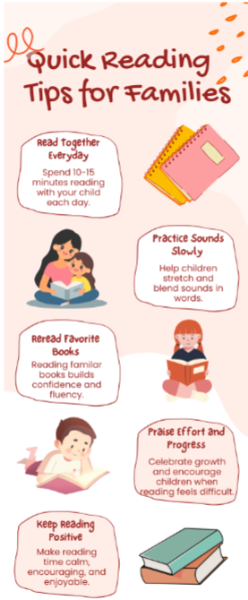
One of the best ways families can support literacy development is by reading together every day. Even spending 10 to 15 minutes reading at home can help children grow their vocabulary, improve comprehension, and become more confident readers. Younger children benefit from listening to books read aloud, while developing readers benefit from taking turns reading with an adult.
Reading familiar books again can also be very beneficial for young readers. Reading the same books more than once helps children recognize words more easily and build confidence. While reading together, adults can ask simple questions about the story, talk about pictures, and encourage children to retell important events. These conversations help children better understand what they read and make reading a more positive experience.
Practice Sounds and Word Parts
Practicing sounds and word parts at home can help children become stronger and more confident readers. Young readers need practice hearing sounds in words, blending sounds, and noticing spelling patterns they already know. Families can support these skills through simple activities during reading practice or even everyday conversations.
One helpful activity is slowly stretching out sounds in words and blending them. Families can also practice rhyming words, clapping syllables, or looking for smaller word parts that students recognize. Sound boxes can also be helpful because they allow children to move a token into a box for each sound they hear in a word. These activities do not need to take a long time. Keeping practice short, positive, and encouraging can help children stay motivated and continue building confidence as readers.
Use Decodable Texts for Practice
Decodable books are another great way families can support reading at home. These books include words with spelling patterns and phonics skills children have already learned in school. This gives students the chance to practice sounding out words instead of guessing based on pictures or memorizing the story.
When children read decodable texts, they are able to apply the skills they are learning during reading instruction. Some words may still be challenging at first, and that is okay. Families can encourage children to slow down, look closely at the sounds in the word, and try again. Praising effort and progress can help children feel more confident during reading practice. Even short reading sessions with decodable texts can help strengthen accuracy and fluency over time.
Make Reading a Positive Experience
Creating positive reading experiences at home can help children develop confidence and motivation as readers. Children are more likely to enjoy reading when they feel supported and encouraged during practice. Keeping reading time calm and positive can help reduce frustration and build a stronger interest in books.
Families can encourage reading by celebrating effort and progress instead of focusing only on mistakes. Letting children choose books that match their interests can also make reading more enjoyable. Some children enjoy reading fiction stories, while others may prefer nonfiction books about animals, sports, or science topics. Reading together, talking about books, and showing excitement about learning can help children see reading as an important and enjoyable part of everyday life.
Supporting reading at home does not need to be complicated or time-consuming. Small routines, encouraging words, and daily reading practice can make a meaningful difference in a child’s literacy growth over time. When families read together, practice sounds and words, and create positive reading experiences, children are more likely to build confidence and develop stronger reading skills.
Every child learns to read at their own pace, and progress may look different for each student. Consistent support and encouragement can help children continue growing as readers both at school and at home.